Warsaw: The Capital That Rebuilt Its Value
Real estate, memory and capital in the city that turned reconstruction into economic strategy.
The City That Refused to Stay Ruined
Warsaw is one of the few European capitals where real estate cannot be understood only through yield, price per square metre, office vacancy or household income. Those numbers matter, but they sit on top of something older and more emotional: a city that was destroyed, planned, rebuilt, nationalised, liberalised and then re-priced by global capital within the span of a single human lifetime.
That is why Warsaw's property market feels different from the softer, more continuous histories of cities such as Vienna or Madrid. Warsaw is not a city that simply inherited its value. It had to reconstruct it. Its streets, façades and skyline are not a smooth timeline, but a sequence of ruptures: royal memory, war damage, socialist planning, post-1989 capitalism, European Union integration and the recent arrival of institutional investors looking for one of Central Europe's most liquid urban markets.
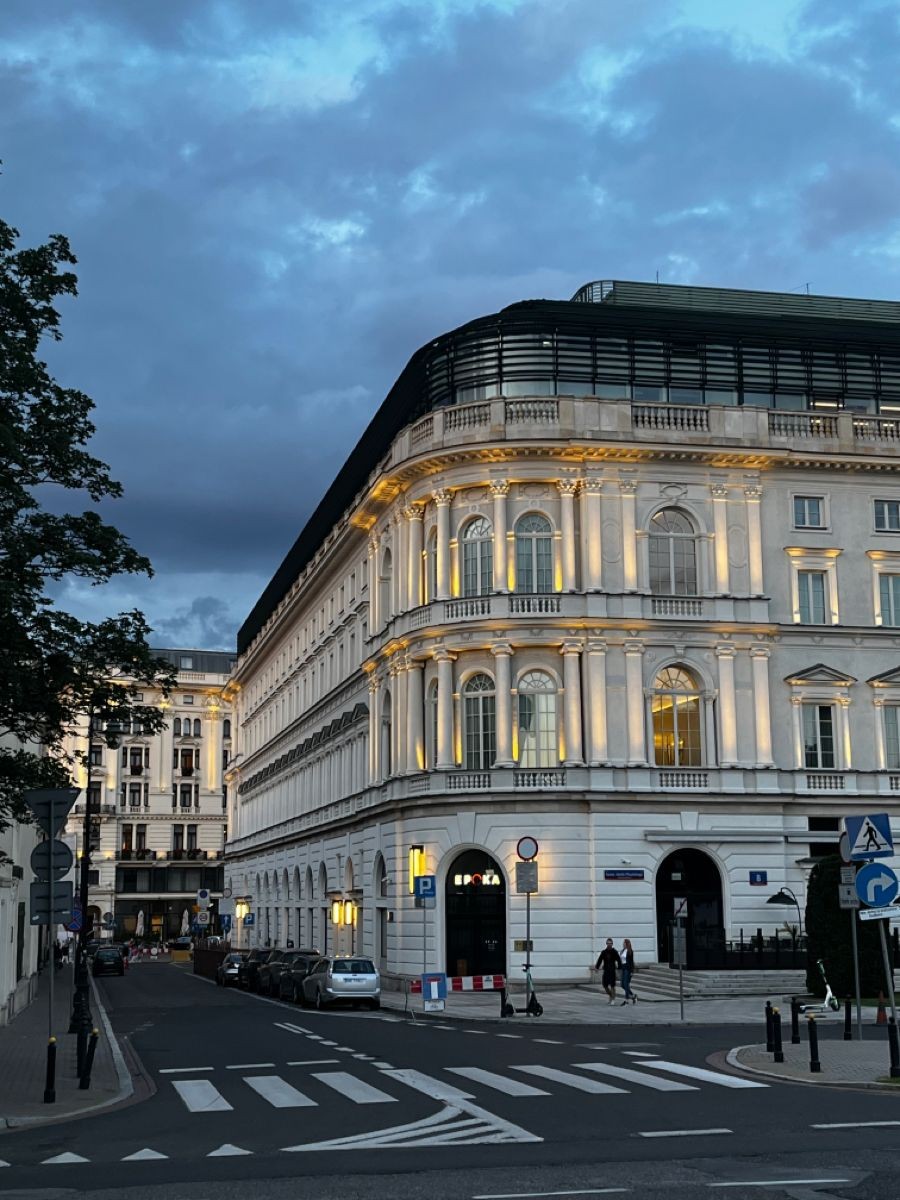
The result is a city whose real estate logic is unusually layered. A rebuilt Old Town can behave like symbolic capital. A socialist-era avenue can become a location of prestige. A glass tower in Wola can trade not only on rent and access, but on the story of Poland's economic comeback. Warsaw sells space, but it also sells proof: proof that a capital can be remade, that ruins can become addresses, and that a peripheral market can become central to European investment strategy.
Warsaw did not simply inherit value. It reconstructed it, layer by layer, until memory itself became part of the market.
Reconstruction as the First Real Estate Strategy
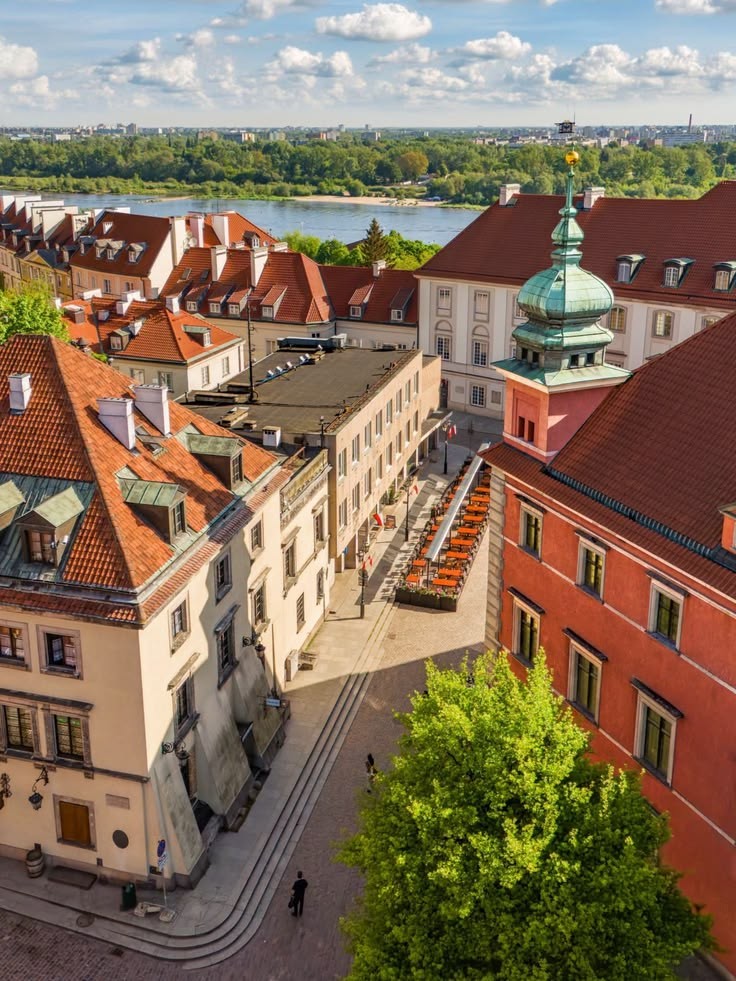
To understand Warsaw's property market, one has to start with destruction. UNESCO describes the Historic Centre of Warsaw as an outstanding example of near-total reconstruction, noting that after the war a five-year campaign restored the Old Town, its churches, palaces and market-place. The Warsaw Reconstruction Office archives, later inscribed on UNESCO's Memory of the World Register, document not only architectural recovery, but also the social and political act of rebuilding a capital from the ruins.
This matters for real estate because reconstruction created a particular kind of urban value. In Warsaw, heritage is not only old. In many cases, it is rebuilt, curated and politically charged. The Old Town is historic and modern at once: medieval in appearance, post-war in material reality, and national in meaning. That gives Warsaw's central districts a rare form of scarcity. Their value is not simply that they are attractive. It is that they carry the story of survival.
The photographs of Warsaw's red roofs, palace façades and tree-lined classical buildings speak to this tension. They do not show a city frozen in the past. They show a city that has learned to use memory as infrastructure. In Warsaw, history is not a decorative layer added to economic life. It is one of the reasons certain streets, views and buildings retain emotional and financial weight.
The Palace, the Towers and the Post-1989 Rewrite
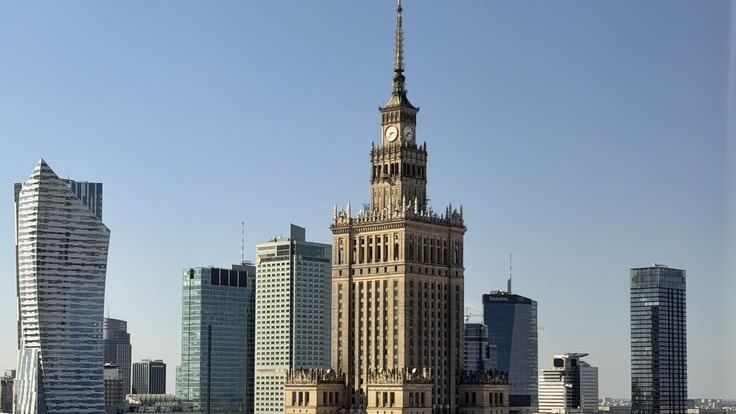
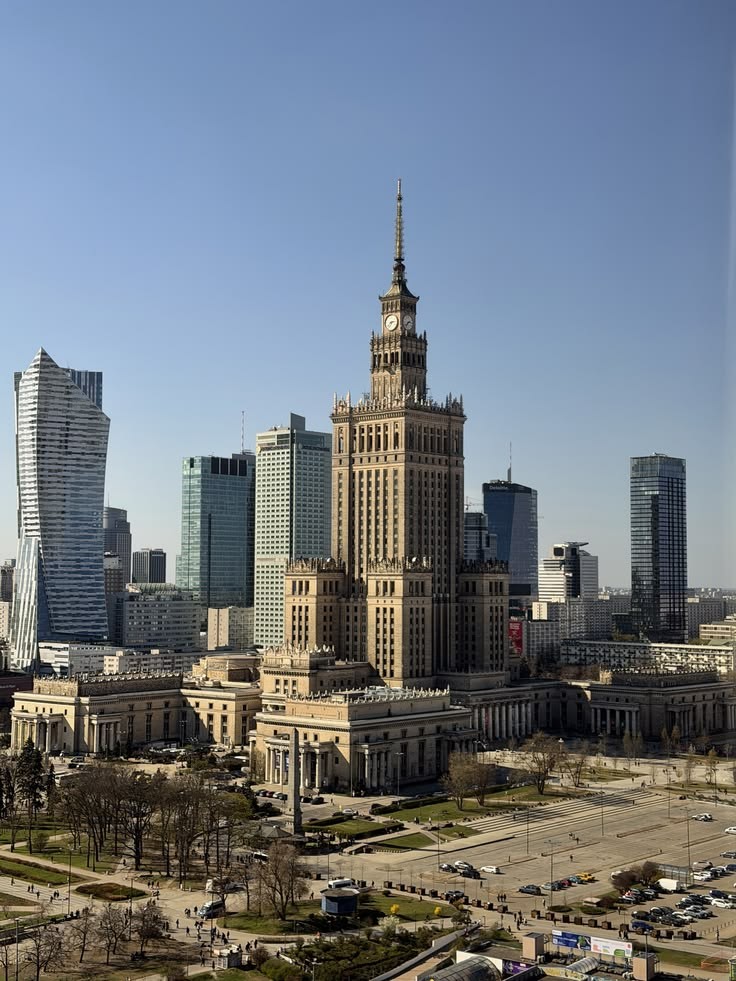
The Palace of Culture and Science remains the most complicated symbol in Warsaw's skyline. Built during the communist period, it once represented Soviet power and ideological control. Today it stands among office towers, hotels, apartments and corporate headquarters. Its meaning has changed because the city around it has changed. What was once a vertical statement of political dominance is now part of a commercial skyline competing with London, Berlin, Prague and Vienna for tenants and investment.
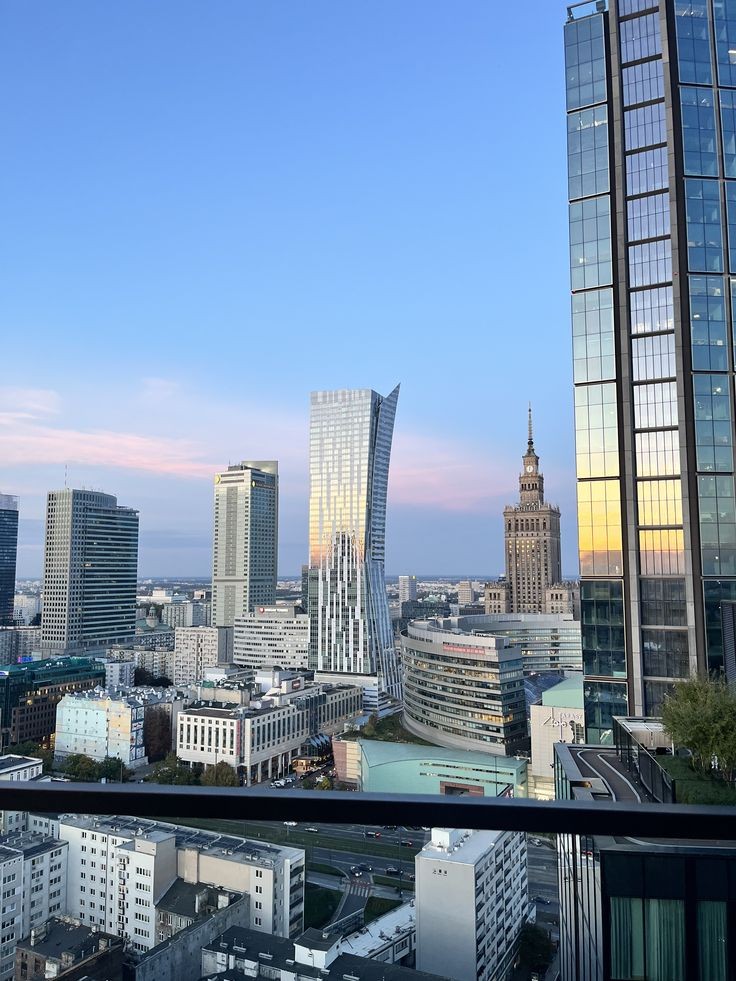
This is one of Warsaw's great urban paradoxes. Its most recognisable tower is not a product of free-market real estate, yet it now sits at the heart of a market-driven business district. Around it, the skyline has filled with newer towers: Złota 44, Varso Tower, Warsaw Spire, Q22, Rondo 1 and a growing cluster of high-rise offices in Wola and Śródmieście. The city's economic geography has moved upward.
After 1989, Warsaw became the command centre of Poland's transition economy. Banks, law firms, consultancies, technology companies and multinational corporations needed modern office space. The city responded with a development cycle that gradually shifted prestige from inherited buildings to efficient floorplates, connectivity, ESG standards and skyline presence. In Warsaw, capitalism did not erase the old city. It built vertically beside it.
A Two-Speed Office Capital
Recent office market reports show a city that has matured quickly. CBRE's Warsaw Office Figures Q2 2026 describes a stable market with limited development activity and a constrained pipeline of new projects. Savills reported that Warsaw ended 2025 with record demand and decreasing availability of space, especially in prime buildings in the centre. Cushman & Wakefield's Q1 2026 Warsaw Office Marketbeat placed vacancy at 9.5% and prime headline rents in the range of EUR 24-29 per square metre per month.
The important point is not just that Warsaw has offices. It is that the best office space is becoming structurally scarce. The years of easy post-transition expansion are over. Prime central buildings, particularly in Wola and Śródmieście, increasingly operate in a landlord-favoured environment, while older and peripheral stock must compete harder. This is why Warsaw is becoming a two-speed market: trophy offices and central locations pull ahead, while ageing buildings face conversion, repositioning or demolition.
This dynamic mirrors the city's wider identity. Warsaw rewards renewal. Buildings that keep up with the city's energy gain value. Buildings that do not risk becoming obsolete. The market is not simply about location anymore; it is about adaptability. In a city rebuilt once from rubble and again through capitalism, the ability to transform is itself an asset class.
In Warsaw, capitalism did not erase the old city. It built vertically beside it.
The Majlis Newsletter
Continue reading with us. New essays on markets, pipelines and capital, delivered as they publish.
Residential Value and the New Middle-Class Question
Warsaw's residential market tells a more intimate story. CBRE's Warsaw and Poland Living Figures Q2 2026 reported that the average offer price of a new apartment in Warsaw reached PLN 19,405 per square metre at the end of Q2 2026, up 6.9% year on year. Statistics Poland also recorded national growth in residential premises prices in late 2025, with stronger gains in the primary market than the secondary market.
For investors, this confirms Warsaw's resilience. For residents, it raises a more difficult question: who is the city being rebuilt for now? The same forces that make Warsaw attractive to capital - employment, wages, universities, infrastructure, business services, international migration and EU connectivity - also make its housing more expensive. A successful city can become less accessible precisely because it is successful.
This tension is visible in the residential geography of Warsaw. Historic central areas, riverside locations, green districts and well-connected neighbourhoods carry a premium. At the same time, new housing supply pushes outward, following metro lines, tram corridors and redevelopment zones. Warsaw's housing market is no longer only a story of local ownership. It increasingly intersects with institutional rental housing, private investors, international capital and the lifestyle expectations of a younger professional class.
The Vistula, Green Space and the Luxury of Breathing Room
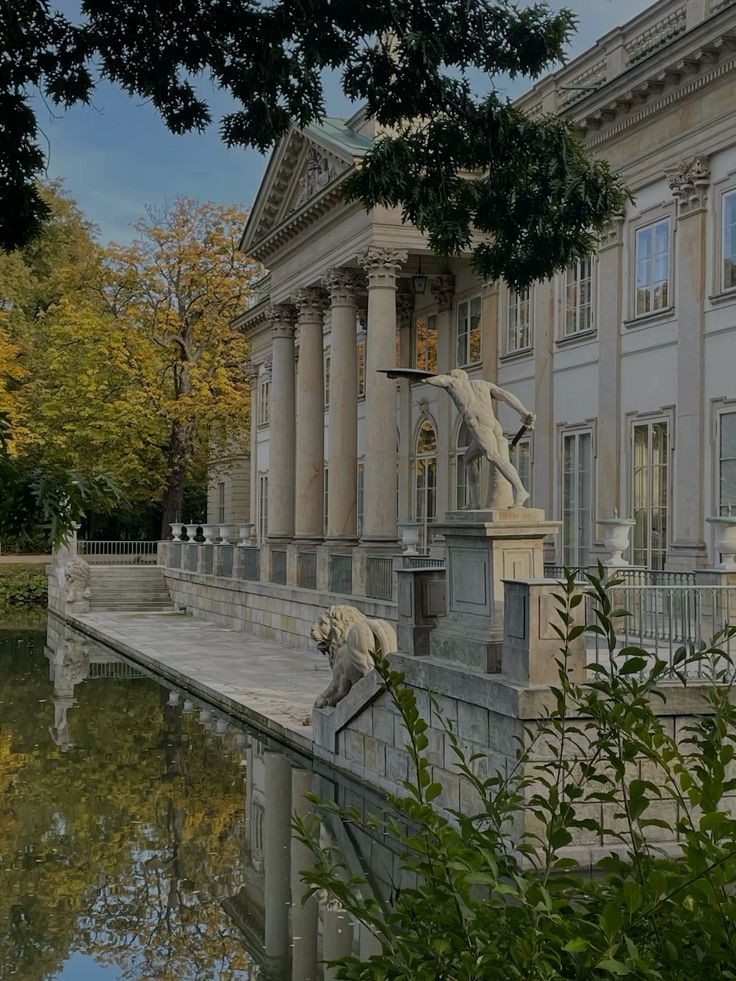
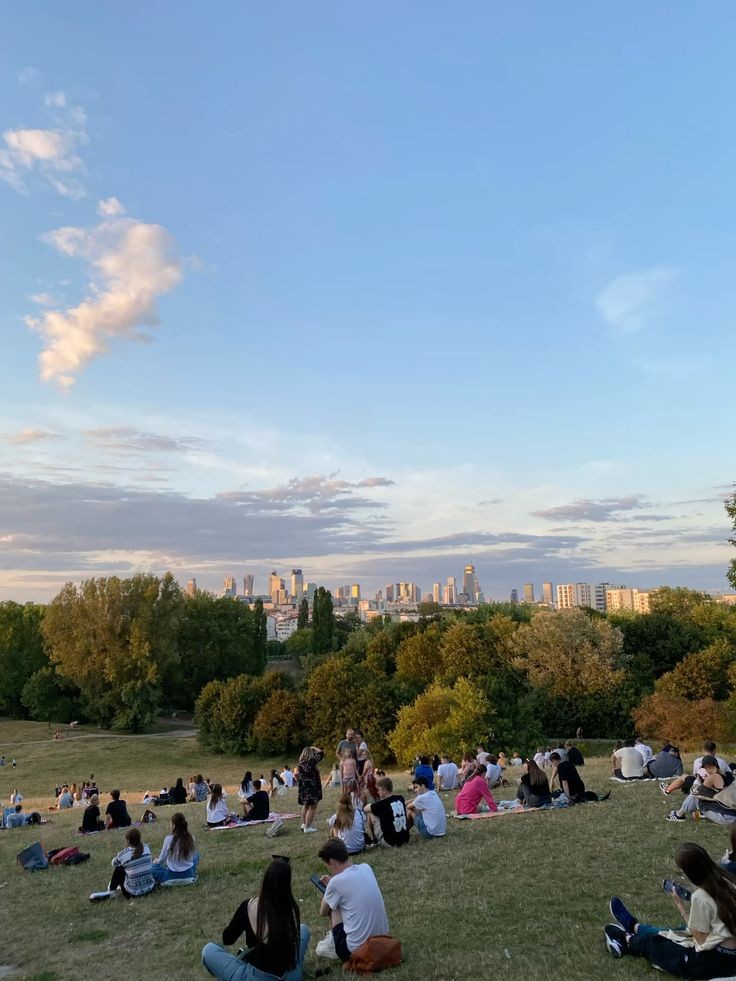
Unlike many capitals where prime value is concentrated only in dense urban cores, Warsaw has another form of appeal: space. The Vistula, parks, escarpments and wide green belts create a softer counterweight to the business skyline. The images of water, parkland and people gathering on open grass show something that is economically important but often overlooked: quality of life as a real estate fundamental.
Łazienki Park, the Vistula riverbanks, Powiśle, Żoliborz and parts of Mokotów offer a version of urban living that differs from the purely financial logic of the office tower. They create residential premiums through calm, greenery, cultural proximity and access to public life. Warsaw's value is not only in its density. It is also in the fact that the city still has room to breathe.
That breathing room is becoming more valuable as European cities compete for talent. Office tenants care about commute, amenities and employee experience. Residential buyers care about parks, schools, cafés, transport and the feeling that everyday life is not swallowed by traffic or corporate architecture. In this sense, Warsaw's green and civic spaces are not sentimental extras. They are part of the city's competitiveness.
A City of Layers, Not One Single Market
Warsaw is sometimes described as a fast-growing Central European capital, but that label is too flat. The city is a mosaic of real estate logics. The reconstructed Old Town trades on memory and tourism. Śródmieście trades on centrality and symbolic power. Wola trades on corporate efficiency and new towers. Mokotów and Służewiec carry the legacy of older business parks. Powiśle, Żoliborz and parts of Praga trade on lifestyle, authenticity and urban texture.
This variety makes Warsaw resilient, but also complicated. There is no single Warsaw market. There are historic assets, institutional offices, luxury apartments, PRS blocks, post-war housing estates, redevelopment sites, cultural districts and suburban commuter zones. Each responds differently to interest rates, wages, supply, foreign capital and changing work habits.
For investors, that means Warsaw rewards precision. Buying the city is not enough. One must understand which Warsaw is being bought: the symbolic capital, the office capital, the residential city, the student city, the green city, the rebuilt city, or the emerging lifestyle city. Each version has a different risk profile.
The Risk Behind the Comeback
Warsaw's story is powerful because it is fundamentally optimistic. It is a city that rebuilt itself after destruction, modernised after socialism, and inserted itself into Europe's commercial map with remarkable speed. But optimism can also produce overconfidence. Strong demand, rising rents and high residential prices can tempt investors to treat growth as inevitable.
The risks are familiar: affordability pressure, interest-rate sensitivity, construction costs, planning constraints, uneven office quality, and the possible overpricing of assets that depend too heavily on the continued expansion of professional employment. The city's best assets may remain scarce, but not every building is prime and not every district will benefit equally from Warsaw's rise.
The more mature Warsaw becomes, the more selective the market will be. That is the transition now underway. The old story was about catching up. The new story is about differentiation. In a catch-up market, almost everything can rise together. In a mature market, capital becomes more disciplined.
The old story was about catching up. The new story is about differentiation.
Conclusion: Value Rebuilt, Not Inherited
Warsaw's real estate market is not compelling because it is perfect. It is compelling because it is unfinished. Few European capitals show so clearly how history, politics, memory and finance can occupy the same skyline. The Palace of Culture stands beside glass towers. Rebuilt Old Town roofs sit near expanding residential districts. Parks and riverbanks soften a city whose economy is increasingly vertical, international and corporate.
That is Warsaw's central real estate lesson: value is not always inherited. Sometimes it is reconstructed. Sometimes it is planned, contested, demolished, rebuilt and re-priced over generations. The city's buildings carry that process in their façades, their floorplates and their locations.
For House of Majlis, Warsaw is therefore not only a market to watch. It is a study in urban resilience. Its real estate value comes from scarcity, employment, capital flows and supply constraints, but also from something less easily modelled: the credibility of a city that has already proven it can reinvent itself. The risk is that investors reduce Warsaw to numbers. The opportunity is to understand the deeper story those numbers are standing on.
Warsaw is not simply becoming more expensive. It is becoming more legible as a European capital of memory, work and reinvention. Its future value will belong to those who understand all three.
References
- BNP Paribas Real Estate Poland. (2026). Review. Office market in Warsaw in Q2 2026. https://www.realestate.bnpparibas.pl/en/review-office-market-warsaw-q2-2026-0
- CBRE Poland. (2026). Warsaw Office Figures Q2 2026. https://www.cbre.pl/en-gb/insights/figures/warsaw-office-figures-q2-2026
- CBRE. (2026). Warsaw and Poland Living Figures Q2 2026. https://www.cbre.co.uk/insights/figures/warsaw-and-poland-living-figures-q2-2026
- Cushman & Wakefield. (2026). Warsaw Office Marketbeat Q1 2026. https://assets.cushmanwakefield.com/-/media/cw/marketbeat-pdfs/2026/q1/emea/warsaw_office_marketbeat__q1_2026.pdf
- Knight Frank Poland. (2026). Warsaw city attractiveness and office market Q1 2026. https://www.knightfrank.com.pl/en/research/warsaw-city-attractiveness-and-office-market-12824.aspx
- Savills Poland. (2026). Warsaw office market ended 2025 with record demand and decreasing availability of space. https://officemarket.pl/en/warsaw-office-market-ended-2025-with-record-demand-and-decreasing-availability-of-space
- Savills Poland. (2026). Spotlight: Warsaw Office Market Q4 2025. https://officemarket.pl/en/spotlight-warsaw-office-market-q4-2025
- Statistics Poland. (2026). Price indices of residential premises in the fourth quarter of 2025. https://stat.gov.pl/en/topics/prices-trade/price-indices/
- UNESCO World Heritage Centre. (n.d.). Historic Centre of Warsaw. https://whc.unesco.org/en/list/30
- UNESCO. (n.d.). Archive of Warsaw Reconstruction Office - Memory of the World. https://www.unesco.org/en/memory-world/archive-warsaw-reconstruction-office
- Muzeum Warszawy. (n.d.). Warsaw Reconstruction Route. https://muzeumwarszawy.pl/en/exhibitions/sciezkaodbudowy/
- Brookfield Partners. (2026). Warsaw office market report - June 2026. https://www.brookfield.pl/en/reports/warsaw-office-market-report-2026
- HOUSE OF MAJLIS - ALL RIGHTS RESERVED
© 2026 House of Majlis. All rights reserved.
Back to the archive