Tokyo: The City That Refuses to Age
Media myth, demographic pressure and the new economics of urban permanence.
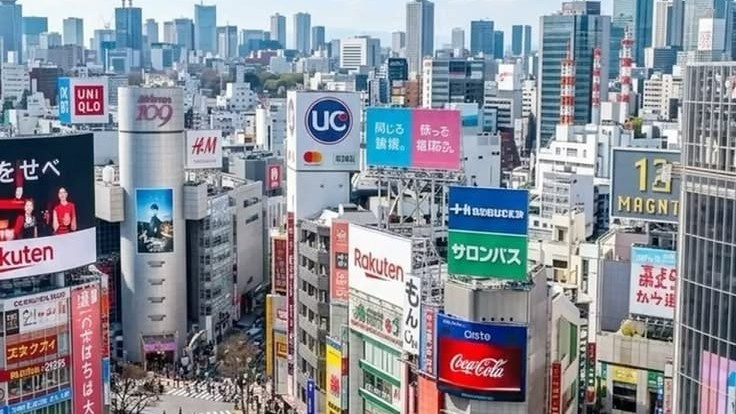
The Capital of Screens and Stations
Tokyo is one of the few cities in the world that feels older than its images and younger than its buildings. It is a capital of wooden temples and concrete alleys, railway platforms and animated billboards, family houses hidden behind vending machines, and apartments so compact that they turn space itself into a design discipline.
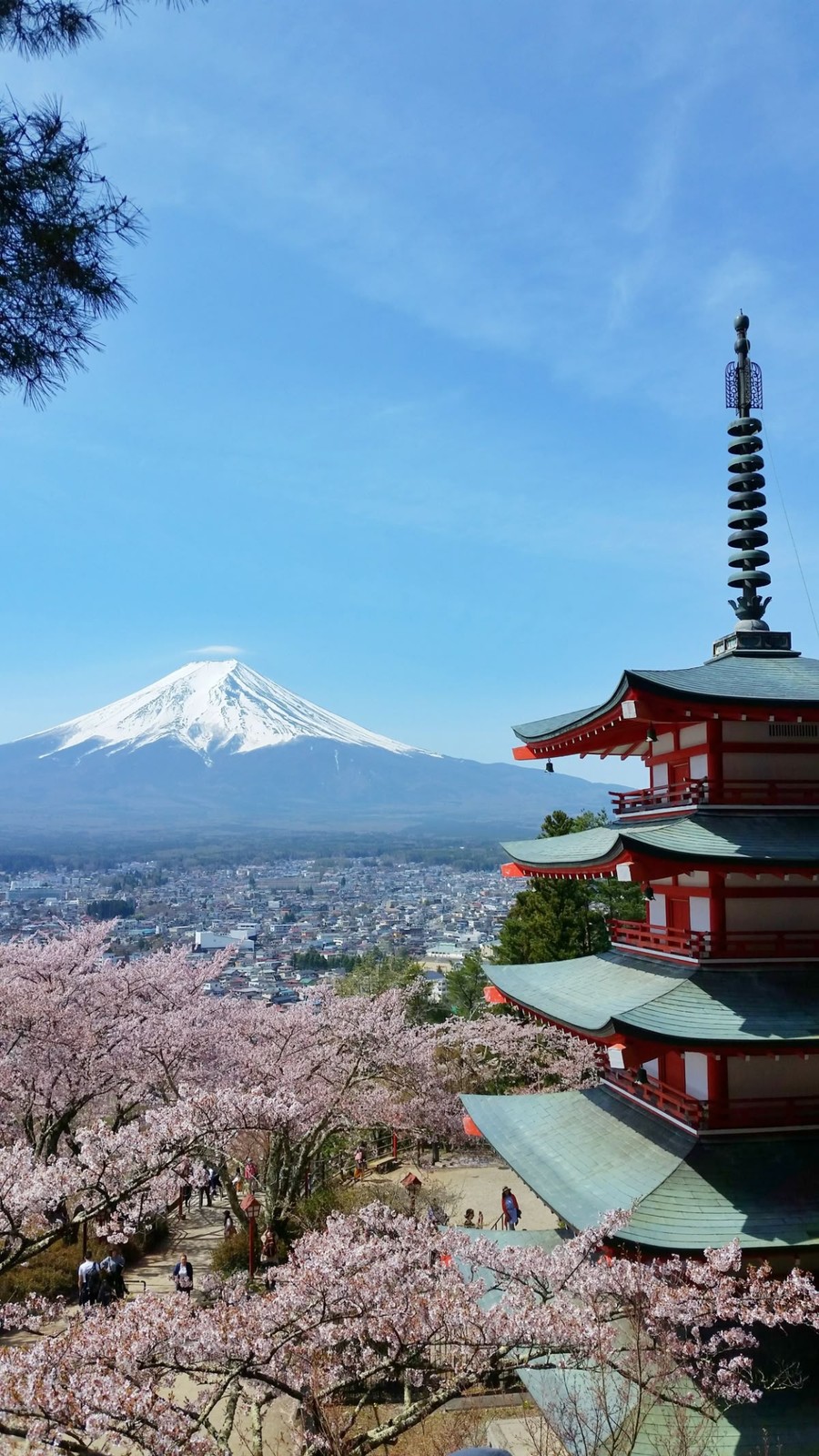
Its real estate market reflects that contradiction. Tokyo is a media city, exported through anime, cinema, design, gaming, fashion and food. For millions of people who have never lived there, Tokyo already exists as a mental landscape: Shibuya crossings, neon signs, quiet backstreets, ramen counters, capsule hotels, cyberpunk towers and cherry blossoms framing Mount Fuji. That global popularity matters because real estate is never only about utility. It is also about imagination.
Yet Tokyo is also the capital of one of the oldest societies on earth. Japan's demographic challenge is no longer a future scenario. It is a structural reality. The country is ageing, its national population is shrinking, and the number of working-age people supporting the economy is under pressure. Tokyo, however, remains the exception inside the national story: a city that still attracts students, professionals, tourists, capital and global attention.
This tension defines the modern Tokyo property market. The country is ageing, but the city is not disappearing. The national economy is burdened by demographic pressure, but central Tokyo offices are tight. Rural Japan faces vacant homes, while Tokyo apartments become more expensive. The national population declines, but the districts most visible to the world become more desirable.
Tokyo is a young image built inside an ageing country.
A City Built Through Rebuilding
Tokyo's real estate logic cannot be understood without its long history of reconstruction. The city has repeatedly rebuilt itself after fires, earthquakes, war, economic bubbles and policy resets. Unlike many European capitals, where old stone buildings anchor value through permanence, Tokyo has often treated buildings as temporary and land as the deeper asset.
That distinction is essential. In Tokyo, the physical house may depreciate, but the address can remain powerful. Buildings are replaced, plots are recomposed, and neighbourhoods evolve quickly. This produces a city where real estate value is less about preserving an individual structure and more about preserving access: to a station, to a school, to an employment district, to a cultural scene, to a rail line that carries millions of daily movements.
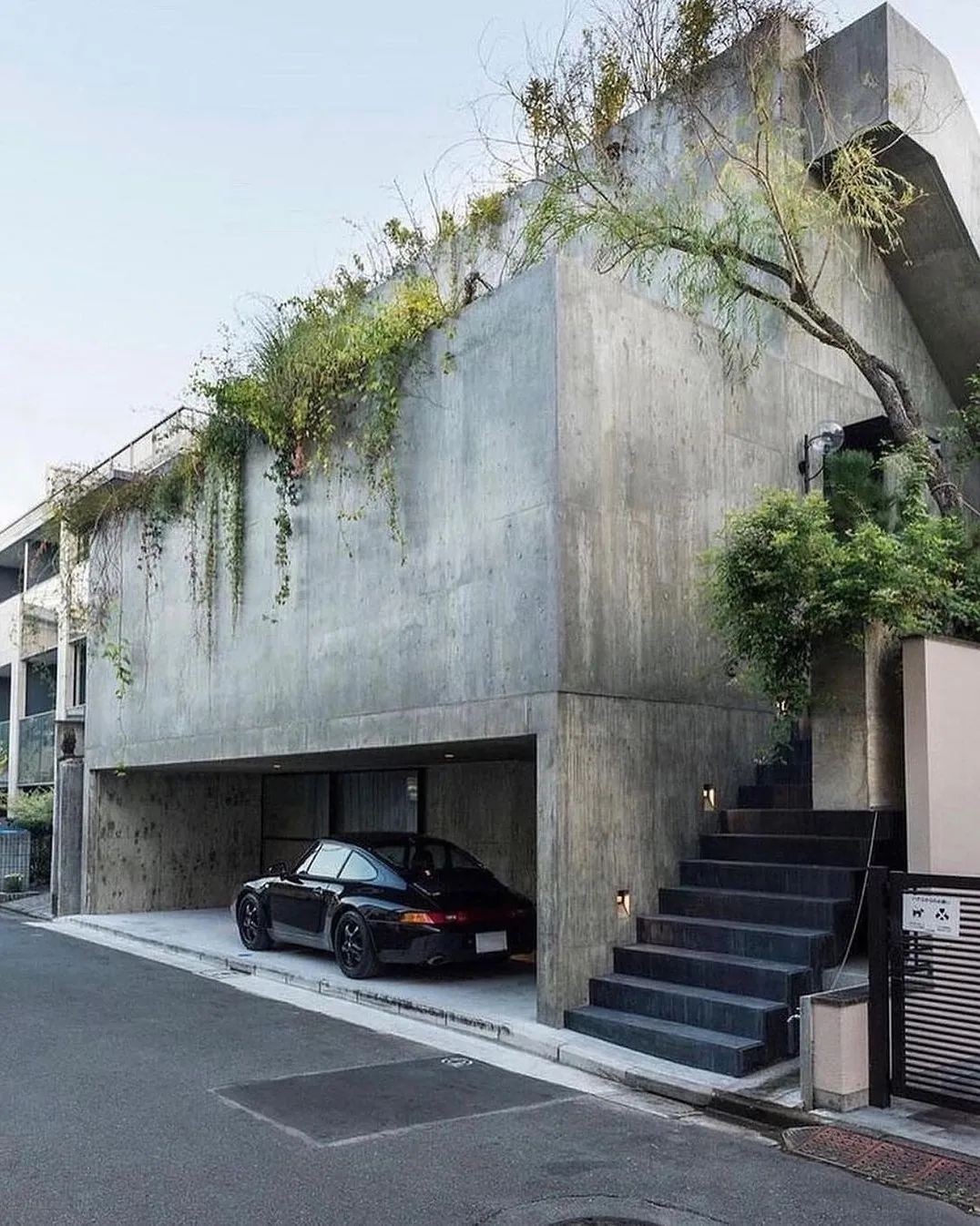
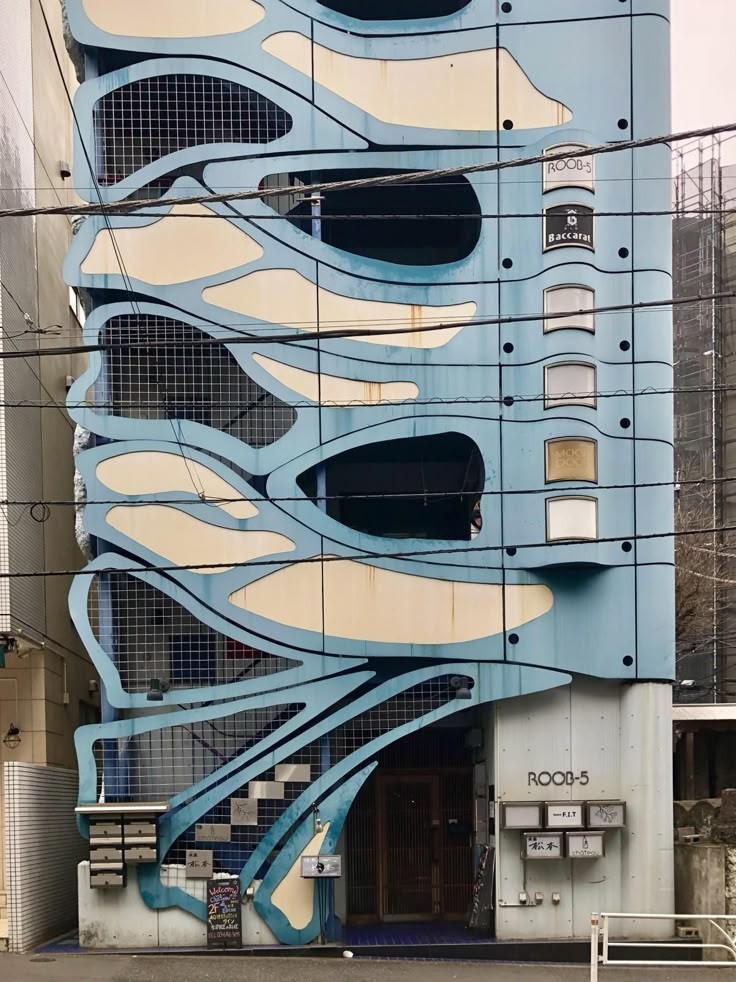
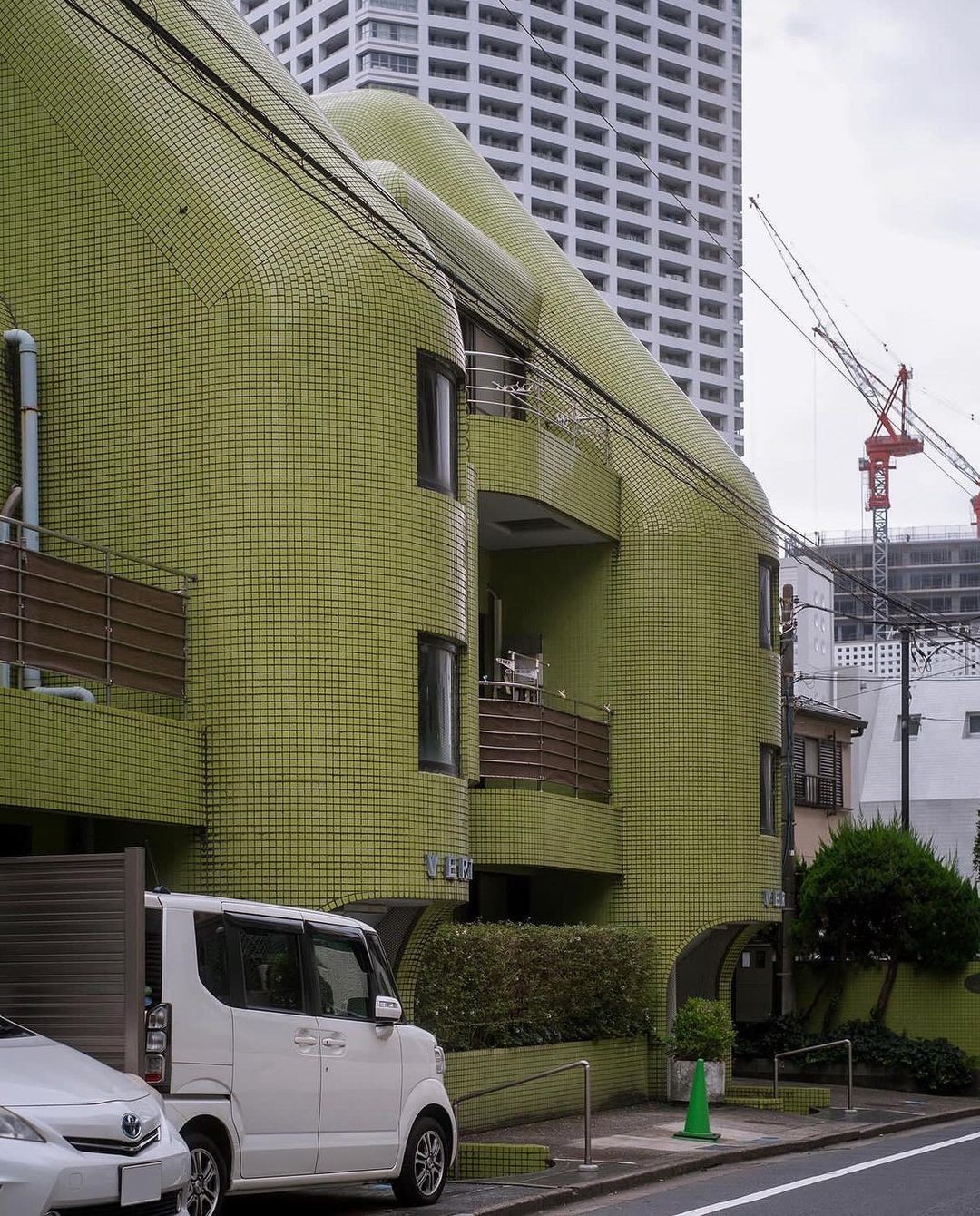
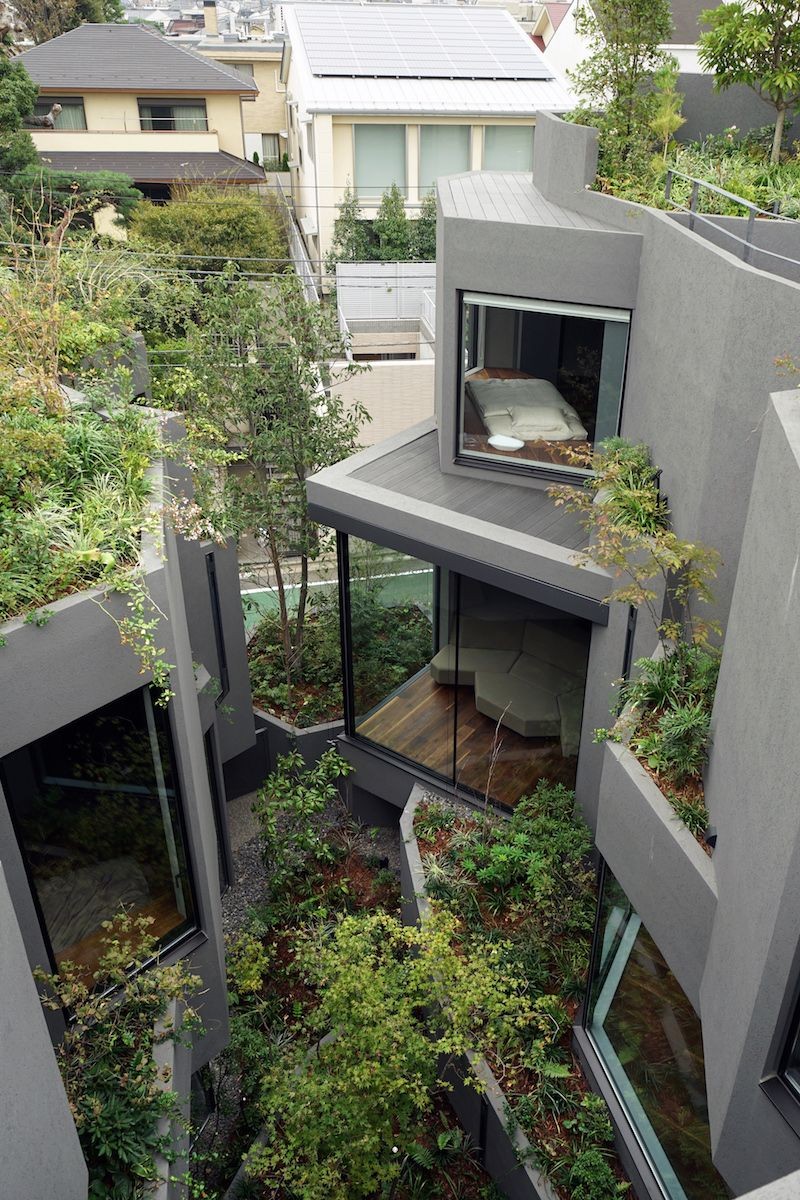
The images selected for this article show that layering. One photograph shows raw concrete softened by plants, almost defensive in form yet intimate in atmosphere. Another shows a green-tiled building whose curves feel playful and postmodern against the density around it. A third captures Shibuya as a machine of movement, commerce and media. Together they suggest a city where architecture is rarely a single grand statement. It is more often an adaptation to constraint.
That is why Tokyo feels both chaotic and highly rational. Its beauty is not always monumental. It is logistical, compressed, and often hidden behind the obvious spectacle.
The Economics of an Ageing Country
Japan's ageing population is the deepest structural fact behind its real estate future. The Cabinet Office's Annual Report on the Ageing Society describes a country where the elderly share of the population is exceptionally high by international standards, while official statistics continue to show long-term pressure on the working-age population (Cabinet Office, 2025; Statistics Bureau of Japan, 2025).
For real estate, this creates two opposite forces. Across much of Japan, population decline and ageing weaken housing demand. Empty homes, inheritance complications and declining local tax bases can place pressure on regional property markets. In smaller cities and rural towns, the problem is not speculative excess but insufficient demand.
Tokyo is different. It concentrates the very groups that remain economically active: young graduates, corporate workers, international professionals, foreign students, high-income households, tourists and institutional investors. The result is a bifurcated national market. Japan can have demographic decline and a hot Tokyo market at the same time.
This contradiction is visible in housing. Ageing increases demand for accessible homes, compact living, assisted services and locations close to healthcare, shopping and transport. At the same time, younger households compete for smaller apartments near jobs and universities. Investors, meanwhile, like rental housing because household formation in Tokyo remains supported by singles, students, couples without children and inward migration from the rest of Japan.
The consequence is not simply higher prices. It is a change in what kind of real estate becomes valuable. Accessibility, low maintenance, station proximity, medical access, walkability and management quality become more important than size alone.
Media Popularity as Real Estate Gravity
Tokyo's global image has become a form of real estate gravity. The city is not only visited; it is consumed through screens long before arrival. Anime, manga, films, video games, music videos, YouTube, TikTok and fashion editorials turn Tokyo into a place of recurring desire.
The Tokyo Tourism Data Catalog reported that in 2025 the most frequently cited reason foreign travelers gave for visiting Tokyo was video-sharing websites, followed by Japanese anime and manga among the top reasons (Tokyo Metropolitan Government, 2026a). The official Tokyo travel guide also frames Tokyo as a worldwide centre of anime and manga, with Akihabara, Nakano and Shibuya acting as recognisable cultural districts (Go Tokyo, n.d.).
This matters for real estate because media does not only sell travel. It sells neighbourhood identity. Shibuya becomes the image of youth, noise and crossing movement. Akihabara becomes the global shorthand for electronics, gaming and otaku culture. Nakano becomes a more layered subculture zone. Ginza remains luxury consumption. Daikanyama and Omotesando become architectural lifestyle. Even places outside Tokyo are drawn into the same media geography, from Mount Fuji viewpoints to anime pilgrimage routes.
In a city where land is scarce and train access defines daily life, cultural recognition can become economic value. Retail rents, hotels, short-stay demand, restaurant turnover and residential desirability are all affected by whether a district sits inside the global imagination.
Media does not only sell travel. In Tokyo, it helps sell neighbourhood identity.
The Majlis Newsletter
Continue reading with us. New essays on markets, pipelines and capital, delivered as they publish.
The Market Beneath the Myth
The market data supports Tokyo's resilience. CBRE's Japan Office MarketView Q4 2025 reported that Tokyo's all-grade office vacancy rate fell to 1.6 percent, while prime areas supported rent increases (CBRE, 2026a). JLL's research on Japan's rental apartments market points to the concentration of apartment investment in central Tokyo, driven by rail density, white-collar employment, student flows and commuting patterns (JLL, 2025).
Land prices also point in the same direction. MLIT's land market publications and Tokyo metropolitan land price summaries show that land value growth has been especially visible in urban, well-connected and commercially active locations (MLIT, 2025; Tokyo Metropolitan Government, 2026b). This is not a market driven only by foreign fascination. It is supported by jobs, infrastructure, institutional capital and the everyday necessity of being close to the railway network.
Still, the myth matters. Tokyo's reputation for safety, order, culinary depth, design intelligence and pop-cultural intensity gives it a global premium. For foreign buyers, the weak yen has at times made Tokyo appear comparatively affordable against cities such as New York, London, Hong Kong or Singapore. For domestic buyers, the city remains the centre of opportunity. For institutional investors, it offers liquidity and scale in a country where many regional markets face demographic decline.
Tokyo therefore occupies an unusual position. It is not a typical growth city, because Japan is ageing. It is not a typical shrinking city, because Tokyo continues to concentrate demand. It is a city where demographic pessimism and asset-market optimism coexist.
Design Under Constraint
Tokyo's most interesting real estate is often born from constraint. Small plots, complex ownership, narrow streets, earthquake standards, sunlight rules and intense land prices force architects to make every metre meaningful. The result is a housing culture that produces surprising forms: concrete shells, vertical gardens, miniature courtyards, split-level interiors, micro-apartments, narrow houses and buildings squeezed into spaces that elsewhere might be considered unbuildable.
The residential images in this article capture that logic. The concrete home with a car tucked beneath it does not try to look decorative. It treats the city as a hard condition and responds with mass, shade and greenery. The courtyard house uses plants not as decoration but as spatial structure. The green-tiled building, almost cartoon-like in its rounded volume, shows another Tokyo instinct: to turn constraint into character.
This design culture has financial consequences. When land is expensive, architecture becomes a tool for extracting liveability from smallness. When plots are fragmented, developers and owners must be inventive. When the population ages, homes must become easier to maintain, better connected and more adaptable. Tokyo's buildings are not always beautiful in a classical sense, but they are highly instructive. They show what happens when density, scarcity and imagination are forced to negotiate every day.
Tourism, Retail and the Pressure of Popularity
Tourism has become another layer of real estate demand. Tokyo Metropolitan Government data showed that foreign travelers to Tokyo reached a record level in 2025, with tourism spending also setting a record (Tokyo Metropolitan Government, 2026c). Visitor flows concentrate in areas already important to residents and investors: Shinjuku, Shibuya, Chiyoda, Minato, Chuo, Asakusa, Akihabara and Ginza.
That concentration creates opportunity but also tension. Hotels, serviced apartments, luxury retail, restaurants and entertainment venues benefit from global demand. Retail streets and station areas become more valuable. Buildings that can capture tourists through food, shopping, culture or experience gain stronger income potential.
But tourism can also make daily life more expensive. It can push commercial rents higher, reshape neighbourhood retail toward visitors, and create friction between residential life and global consumption. Japan's wider tourism boom has already created debates around overtourism, infrastructure strain and local resentment in several destinations. Tokyo is better equipped than many cities to absorb large flows, but even Tokyo has limits.
The question for real estate is therefore not whether popularity is good or bad. It is how durable and inclusive that popularity becomes. A district that only performs for tourists can lose local depth. A district that balances visitors, residents, workplaces and culture becomes much more resilient.
The Risk of a Two-Speed Tokyo
Tokyo's greatest risk is not that it suddenly loses relevance. The risk is that it divides into two different cities. One Tokyo becomes more global, more expensive, more media-visible and more attractive to capital. The other Tokyo remains local, ageing, less fashionable and increasingly pressured by maintenance costs, inheritance issues and declining household formation.
This two-speed future is already visible in Japan more broadly. Central locations with strong rail access, global recognition and employment density can rise in value even as peripheral regions struggle. Within Tokyo itself, the same logic can separate station-front districts from less convenient areas, new condominiums from older buildings, professionally managed assets from ageing small properties.
Ageing intensifies this divide. Older owners may be asset-rich but income-constrained. Younger families may be priced out of central locations. Investors may prefer compact rental housing, while society needs a broader mix of family homes, senior-friendly housing and affordable supply. A strong Tokyo real estate market is not automatically a healthy Tokyo housing system.
That is the central tension. Tokyo's market can look efficient from the viewpoint of capital and still feel difficult from the viewpoint of residents.
A strong Tokyo property market is not automatically a healthy Tokyo housing system.
Conclusion: A Young Image, an Old Country
Tokyo refuses to age in the global imagination. It remains futuristic, cinematic, strange, clean, dense and endlessly reproducible through images. Every generation discovers a new Tokyo: the city of neon, the city of anime, the city of minimalist houses, the city of ramen counters, the city of quiet alleys, the city of Shibuya crossings and Mount Fuji postcards.
But the country around it is ageing. That demographic reality will shape every part of Japanese real estate: where demand survives, where homes empty out, what kinds of buildings are needed, and which locations can still justify high prices. Tokyo's strength comes from being the exception, but that exception is not effortless. It depends on infrastructure, inward migration, media relevance, tourism, employment and the capacity to keep reinventing limited space.
The lesson of Tokyo is not that ageing destroys real estate. Nor is it that global popularity solves everything. The lesson is more precise: in an ageing country, value concentrates where movement, imagination and daily necessity overlap.
Tokyo is that overlap. It is a city of screens and stations, of shrinking national demographics and rising central value, of buildings that disappear and land that remembers. Its future will not be defined only by population charts or property prices. It will be defined by whether a city so famous for reinvention can continue to turn constraint into desirability.
References
- Cabinet Office, Government of Japan. (2025). Annual report on the ageing society: FY2025 summary. https://www8.cao.go.jp/kourei/english/annualreport/2025/pdf/2025.pdf
- CBRE. (2026a). Japan Office MarketView Q4 2025. https://www.cbre.com/insights/figures/japan-office-marketview-q4-2025
- CBRE. (2026b). Japan Market Outlook 2026. https://www.cbre.co.jp/en/insights/reports/japan-market-outlook-2026
- Go Tokyo. (n.d.). Anime and manga. The Official Tokyo Travel Guide. https://www.gotokyo.org/en/story/guide/anime-and-manga/index.html
- Japan National Tourism Organization. (n.d.). Ueno and Akihabara. https://www.japan.travel/en/destinations/kanto/tokyo/ueno-and-akihabara/
- JLL. (2025). Multiscale analysis of Japan's rental apartments market. https://www.jll.com/en-jp/insights/multiscale-analysis-of-japan-s-rental-apartments-market
- Ministry of Land, Infrastructure, Transport and Tourism. (2025). Part 1: Trends concerning land. https://www.mlit.go.jp/totikensangyo/content/001908011.pdf
- Statistics Bureau of Japan. (2025). Statistical handbook of Japan 2025. https://www.stat.go.jp/english/data/handbook/pdf/2025all.pdf
- Tokyo Metropolitan Government. (2026a). Why do foreign travelers visit Tokyo? Tokyo Tourism Data Catalog. https://data.tourism.metro.tokyo.lg.jp/en/data/case-03/
- Tokyo Metropolitan Government. (2026b). Overview of official land prices in Tokyo, 2026. https://www.metro.tokyo.lg.jp/information/press/2026/03/2026031703
- Tokyo Metropolitan Government. (2026c). Survey results on tourists visiting Tokyo in 2025. https://www.metro.tokyo.lg.jp/information/press/2026/06/2026063001
- Tokyo Metropolitan Government. (2026d). Where do travelers go in Tokyo? Tokyo Tourism Data Catalog. https://data.tourism.metro.tokyo.lg.jp/en/data/case-02/
- [House of Majlis - All rights reserved]
- This publication is intended as an editorial market essay. It is not investment, legal or financial advice.
© 2026 House of Majlis. All rights reserved.
Back to the archive