Seoul: The Property Market of a Disappearing Future
What happens to one of the world's most concentrated property markets when the population behind it starts to shrink?
The capital that absorbed the country
Seoul is one of the most intense real-estate stories in Asia because it is not just a city. It is the place where South Korea has concentrated government, finance, technology, education, culture, corporate headquarters and social aspiration into a single metropolitan machine.
The result is a property market that often feels detached from the demographic reality of the country around it. South Korea is ageing rapidly, its fertility rate remains among the lowest in the world, and long-term population decline is no longer a distant possibility. Yet Seoul's best offices remain tight, its redevelopment districts remain politically explosive, and its housing market continues to behave as if everyone still needs to be near the centre.
That contradiction is the core of Seoul. It is a city pricing itself on concentration while the nation behind it begins to confront disappearance.
A housing market built around apartments
Unlike many older global capitals, Seoul's housing identity is dominated by apartments. The apartment complex is not merely a building type; it is a financial product, a social status marker, a family strategy and a political issue. In Seoul, the apartment has become the main vessel through which households store wealth and express middle-class arrival.
This matters because apartment-led urbanism creates a different kind of scarcity. The question is not only how much housing exists, but where it sits in the hierarchy of school districts, subway lines, corporate access, redevelopment prospects and Gangnam-linked prestige. In that structure, two homes of similar size can belong to completely different economic worlds.
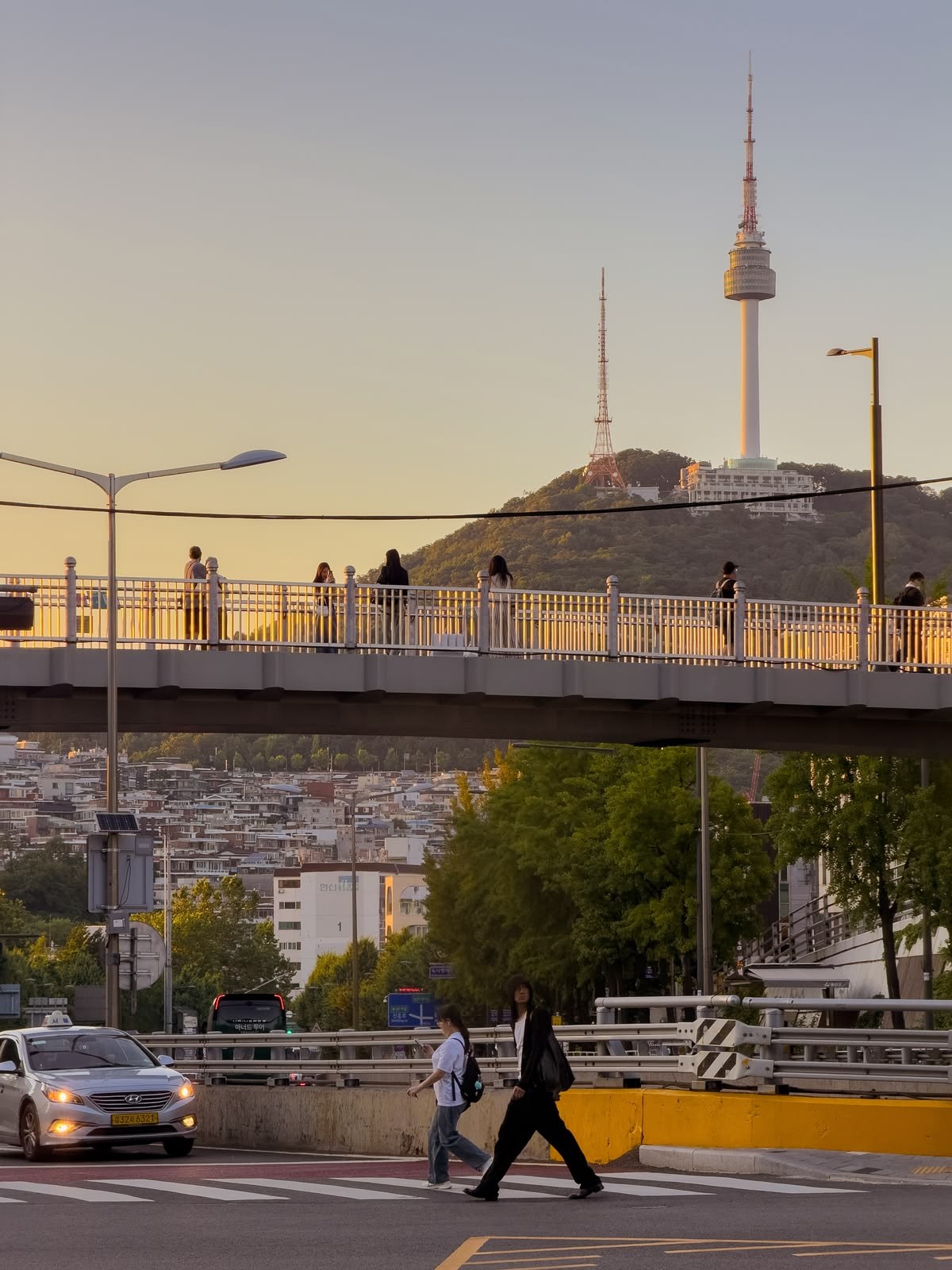
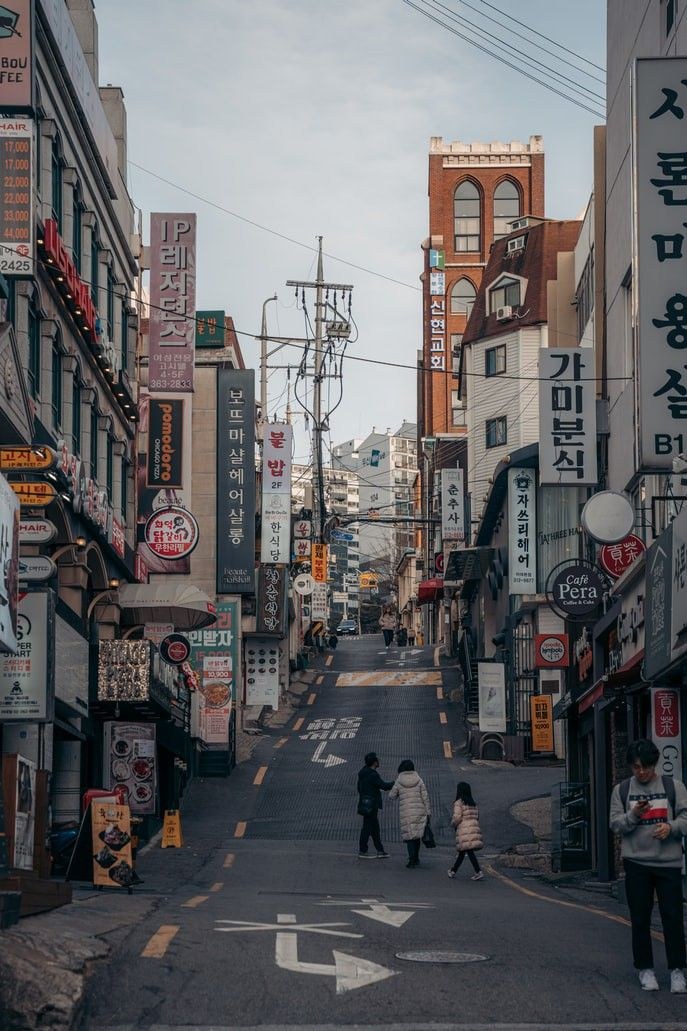
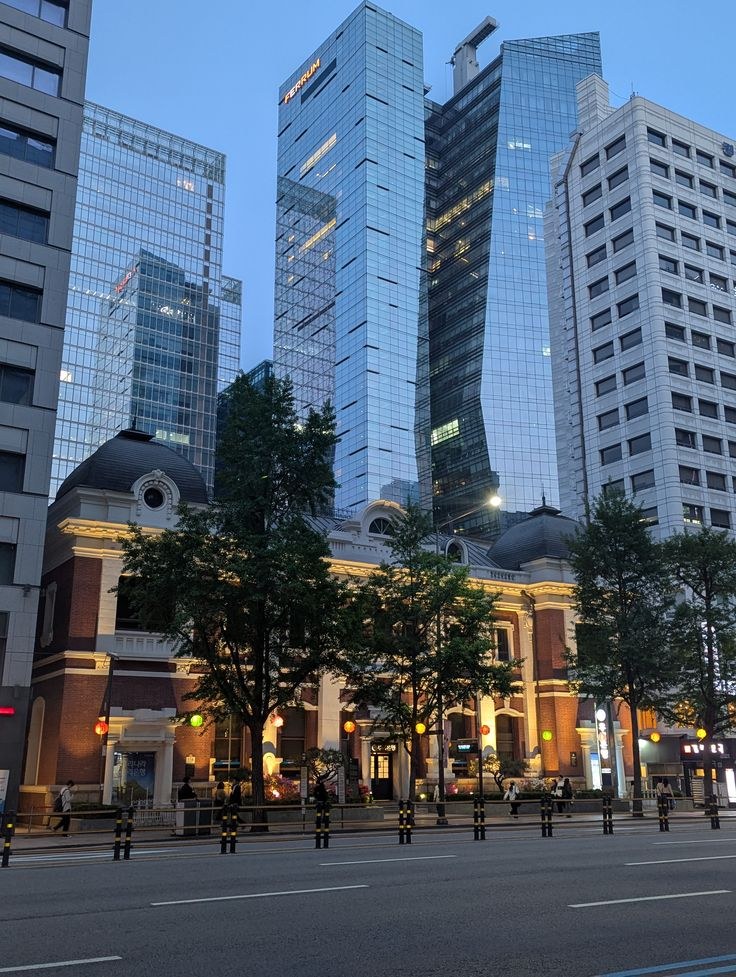
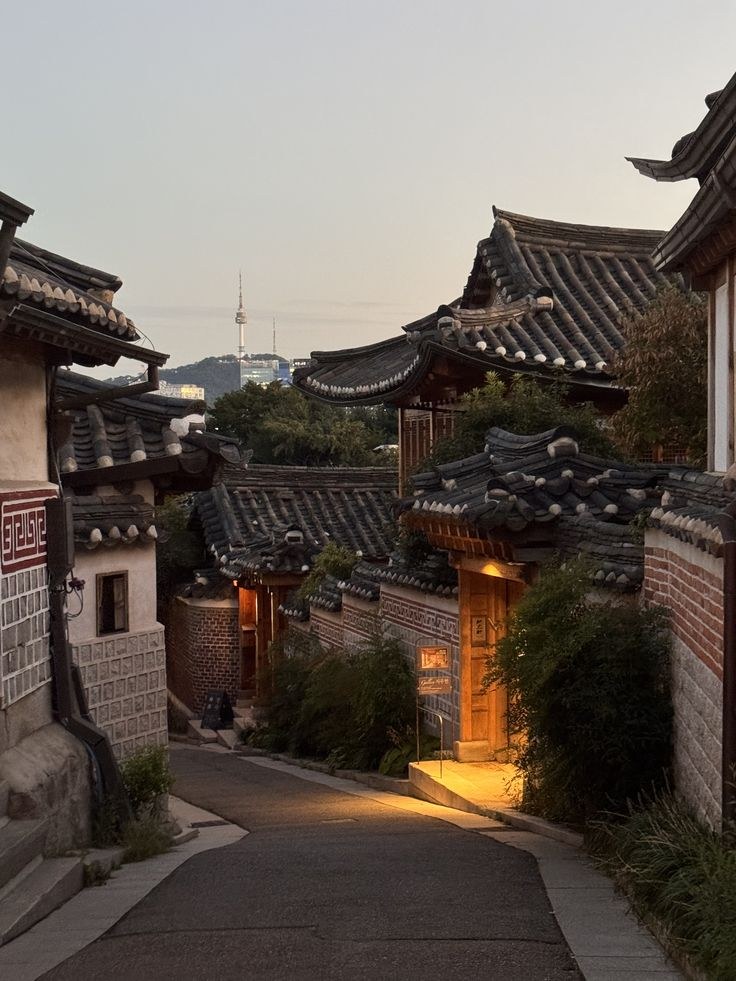
The visual language of Seoul captures this tension. A narrow street of signs and restaurants can sit minutes from a redevelopment zone; a palace roofline can frame a telecom tower; a low brick building can survive beneath a wall of glass offices. Seoul is not smooth. It is layered, vertical, pressured and constantly negotiating between old ground and new capital.
Jeonse: the rental system that makes Seoul different
Any serious reading of Seoul real estate has to start with jeonse, the Korean lease system in which tenants provide a large lump-sum deposit instead of paying monthly rent. The system links housing, household savings, credit conditions and trust in a way that is difficult to compare with Western rental markets.
Jeonse made sense in a high-growth economy where landlords could use deposits productively and tenants could avoid monthly rent. But in a slower, more financialised environment, the model creates fragility. When home prices soften, interest rates move, fraud scandals appear or redevelopment displaces residents, the deposit-based system can become a source of instability rather than security.
Seoul Economic Daily reported in 2026 that redevelopment projects could push tens of thousands of households into an already tight rental market, while owner-occupancy rules and reduced jeonse listings were worsening pressure in some districts. In Seoul, redevelopment does not simply create future supply. It can create immediate rental stress before the new buildings arrive (Seoul Economic Daily, 2026).
The office market refuses to weaken
The demographic story would suggest caution. The commercial market tells a more complicated story. CBRE reported that Grade A office vacancy across Seoul's three major business districts rose to 4.2% in Q2 2026 after new supply, but new leasing volume reached 143,881 sq. m., the highest level since Q1 2025. Gangnam remained especially tight, while CBD and Yeouido absorbed new stock with varying degrees of pressure (CBRE Korea, 2026a).
CBRE also reported that Seoul's commercial real estate investment market reached a record annual transaction volume of KRW 33.7 trillion in 2025, led by office and logistics assets (CBRE Korea, 2026b). That is not the behaviour of a market investors have abandoned. It is the behaviour of a capital city whose best assets still function as institutional magnets.
The explanation is concentration. Seoul hosts many of South Korea's strongest corporate ecosystems: technology, finance, entertainment, professional services, conglomerates, start-ups, universities and public institutions. Even if the national population shrinks, the country's most productive activity may remain disproportionately drawn toward the capital region.
The capital region as a national imbalance
The Bank of Korea has described the Seoul Metropolitan Region as disproportionately concentrated, holding more than half of South Korea's population in roughly 12% of the country's land area (Bank of Korea, 2023). That fact turns Seoul real estate into more than a city market. It becomes a national imbalance converted into land value.
This concentration creates resilience. Companies want to be near talent, talent wants to be near companies, students want to be near universities, and households want access to the schools, hospitals, transport and cultural infrastructure that concentration produces. The more activity clusters in Seoul, the harder it becomes to leave Seoul.
But concentration also creates fragility. If the country continues ageing and shrinking, the capital may not collapse first. It may absorb even more of the remaining demand. Regional cities may empty faster, while Seoul's core remains expensive. That would make Seoul look strong, but only because weakness elsewhere is feeding it.
The Majlis Newsletter
Continue reading with us. New essays on markets, pipelines and capital, delivered as they publish.
Redevelopment as both solution and pressure
Seoul's built form is constantly being rewritten. Large apartment complexes age, low-rise neighbourhoods are assembled, old districts are upzoned, and towers replace smaller structures. Redevelopment is one of the city's main answers to scarcity, but it also creates conflict around relocation, affordability, heritage and speculation.
Government and city policy increasingly frame housing supply as part of the response to low fertility. Seoul has expanded long-term jeonse housing support for newlyweds through programmes such as Mirinaejip, explicitly linking housing stability to the birth-rate crisis (Seoul Metropolitan Government, 2024). That connection is revealing. In Seoul, housing is no longer just an asset question. It is a demographic question.
If young households cannot access stable homes, they delay marriage, delay children or leave the city. If supply expands too slowly, prices keep rising. If redevelopment accelerates too quickly, renters are displaced before replacement housing is ready. Seoul's real estate dilemma is therefore circular: the city needs redevelopment to remain liveable, but redevelopment can make the city harder to live in.
A demographic shadow over the skyline
South Korea's demographic trajectory is severe. The OECD has warned that Korea faces an unprecedented demographic challenge, with the lowest fertility rate in the world and a population expected to shrink and age dramatically over coming decades (OECD, 2025). Official preliminary data showed Korea's total fertility rate rising to 0.80 in 2025 from 0.75 in 2024, but this remains far below replacement level (Ministry of Data and Statistics, 2026).
For real estate, the easy conclusion would be that fewer people means lower demand. Seoul complicates that logic. A shrinking country can still have an expensive capital if people and firms concentrate there even more intensely. A smaller young population can still bid aggressively for the same few school districts, jobs and apartment complexes if the rest of the country offers fewer comparable opportunities.
But the long-term risk is unavoidable. If the working-age population contracts, if household formation weakens and if younger buyers are priced out, the housing market must eventually ask who the next marginal buyer will be. Seoul may not face Tokyo's exact future, but it is beginning to ask a similar question under more compressed conditions.
Culture, media and the global image of Seoul
Seoul's property story is also strengthened by cultural power. K-pop, Korean dramas, cinema, fashion, food and beauty have turned Seoul into a global image long before many foreigners understand its housing system. The city is now consumed through screens: neon streets, palace courtyards, riverside bridges, coffee shops, apartments, studios and corporate towers become part of the same exportable urban identity.
That media visibility matters for real estate because it converts location into desire. Districts become recognisable. Lifestyle becomes legible. Visitors arrive with an emotional map already formed by entertainment. Seoul's global cultural economy does not automatically create a property boom, but it reinforces the idea that the city is not peripheral. It is a capital of taste, technology and aspiration.
This is visible in the images chosen for this article: hanok roofs under the Namsan Tower, bright temple colour, dense commercial streets, glass headquarters, bridges, hills and towers. Seoul sells neither pure tradition nor pure futurism. Its appeal lies in the collision.
The question Seoul cannot avoid
Seoul's strongest real estate assets may remain strong for years: prime offices, well-located apartments, redevelopment sites, riverfront districts and areas tied to education and employment. The city is too central to South Korea's economy to be dismissed by a simple demographic headline.
Yet the market's strength is also its warning. When one region holds so much of a country's people, wealth, employment and ambition, property values begin to depend on continued over-concentration. The stronger Seoul becomes relative to the rest of Korea, the more politically and socially difficult its housing market becomes.
That is why Seoul may be the most intellectually interesting city in this series. It is not just a story of scarcity. It is a story of concentration facing demographic reversal. It asks whether a city can keep becoming more valuable while the population pyramid beneath it becomes more fragile.
Conclusion: a market built on concentration
Seoul is not a conventional demographic risk story. It is a city where population decline does not automatically translate into falling demand, because the country's economic and cultural gravity is still pulled toward the capital region.
Its office market remains institutionally relevant. Its apartment market remains emotionally and financially powerful. Its redevelopment pipeline remains essential but disruptive. Its jeonse system remains unique and fragile. Its media image keeps expanding abroad, even as its domestic demographic base becomes more uncertain.
That is the central tension. Seoul's real estate market is strong because it concentrates opportunity. But the same concentration makes housing unaffordable, redevelopment politically sensitive and national demographic decline harder to ignore.
In the end, Seoul is not simply asking whether real estate can survive a shrinking population. It is asking whether a single city can keep absorbing a nation's ambition while the nation itself begins to age out of growth. The answer may define not only Seoul's skyline, but the next chapter of South Korea's economy.
References
- Bank of Korea. (2023). Regional migration and economy [BOK Issue Note 2023-29]. Bank of Korea.
- Bank of Korea. (2017). Impact of population aging on the housing market. Economic Research Institute, Bank of Korea.
- CBRE Korea. (2026a). Seoul Figures Q2 2026. CBRE.
- CBRE Korea. (2026b). Seoul commercial real estate market posts record investment volume in 2025, led by office and logistics assets. CBRE.
- CBRE Korea. (2026c). 2026 Korea real estate market outlook. CBRE.
- JLL. (2026). Seoul office market report Q2 2026. JLL Research.
- Ministry of Data and Statistics. (2026). Preliminary results of birth and death statistics in 2025. Government of the Republic of Korea.
- OECD. (2025). Korea's unborn future: Understanding low-fertility trends. OECD Publishing.
- Seoul Economic Daily. (2026). Seoul redevelopment drives 18,000 households into tight rental market.
- Seoul Metropolitan Government. (2024). Mirinaejip: Long-term jeonse housing programme for newlyweds. Seoul Metropolitan Government.
- Yonhap News Agency. (2025). Seoul homes account for over one-third of South Korea's total housing market value: BOK.
© 2026 House of Majlis. All rights reserved.
Back to the archive