London: The City That Refuses to Disappear
After Brexit, COVID and remote work, global capital keeps coming back. London is not experiencing the death of the office. It is experiencing the death of the mediocre office.
The city everyone keeps writing off
London has been declared vulnerable many times. Brexit was supposed to weaken its global position. COVID was supposed to empty its offices. Remote working was supposed to permanently reduce demand for central space. Higher interest rates were supposed to freeze capital flows. Britain's weak economic growth was supposed to make investors look elsewhere.
And yet London remains present. Not only as a city of history, law, finance, culture and politics, but as one of the world's deepest real-estate markets. It is not the easiest city to own. It is not the cheapest city to occupy. It is not always the fastest-growing city in Europe. But it remains one of the places where global capital returns when it wants liquidity, legal certainty, prestige and scale.
That is the central paradox of London real estate. The city can look tired, expensive, politically complicated and over-regulated. Then, just when the market is expected to fade, it reminds investors why it became global in the first place. London does not need to be perfect to remain powerful. It needs to remain useful, liquid and recognisable.
A city built in layers
London's real-estate value is not created by a single skyline. It is created by layers. Georgian terraces, Victorian streets, garden squares, royal parks, railway stations, embassies, clubs, universities, hotels, theatres, financial towers and residential crescents all sit beside one another in a dense hierarchy of reputation.
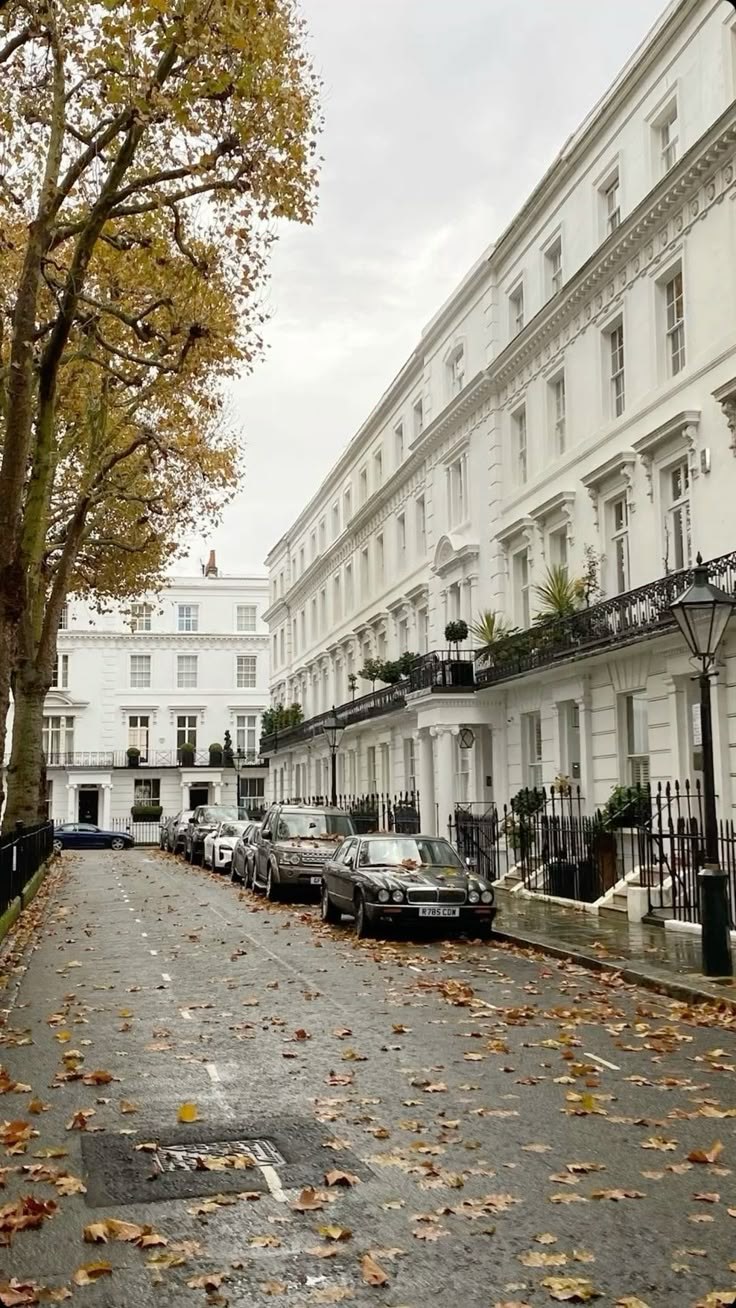
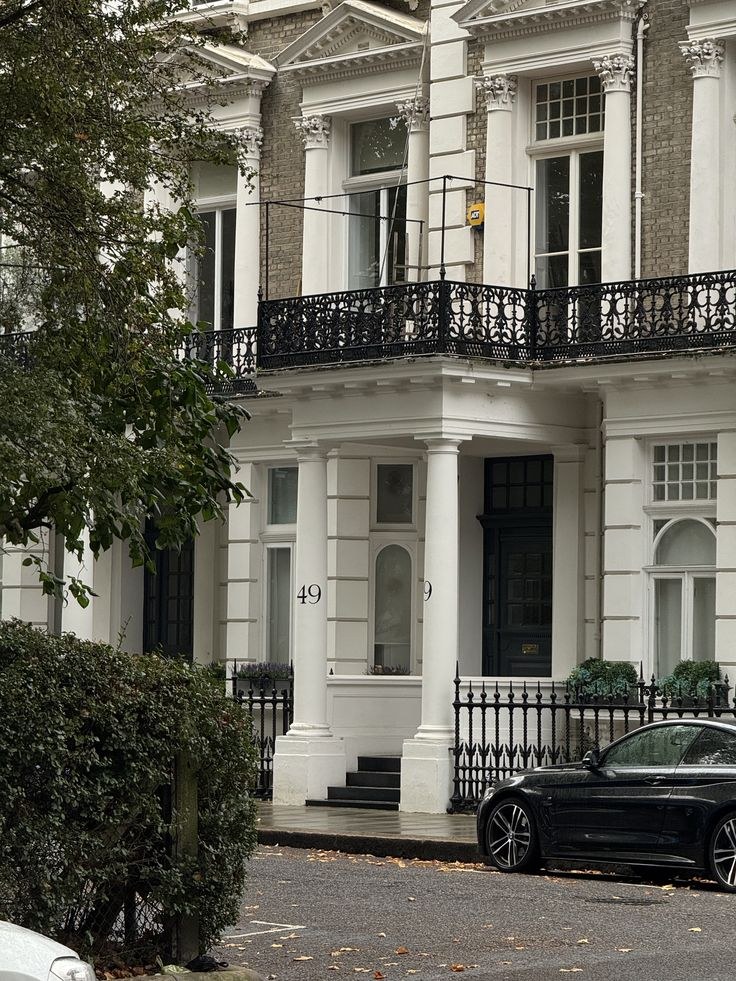
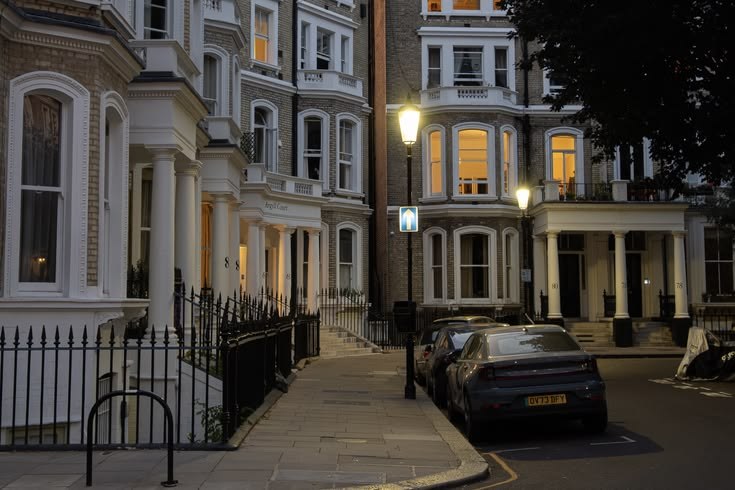
That is why London photographs differently from newer global cities. One image shows a white stucco street after rain, with autumn leaves on the road and parked cars beneath mature trees. Another shows a black-railed terrace front, a classic door, columns, brick and white trim. These are not simply charming streets. They are an asset class. They represent history converted into scarcity.
In London, the old building is often not the opposite of value. It is the reason value exists. Heritage limits supply. Conservation areas restrict demolition. Planning rules slow replacement. Prestige compounds over centuries. The result is a market where the most desirable addresses are not always the newest. They are the most established.
Why global capital keeps coming back
CBRE's 2026 European Investor Intentions Survey again placed London as Europe's leading city for cross-border real-estate investment. That ranking matters because it came after years in which London was supposed to be losing relevance. Investors are not blind to the city's risks. They price them, debate them, and then often return anyway.
The reason is depth. London offers offices, hotels, logistics, residential, student housing, life sciences, retail, mixed-use estates and some of the most liquid prime assets in Europe. It has global law firms, financial institutions, asset managers, insurers, media groups, technology companies and universities. In real estate, depth is not glamorous, but it is decisive. It means there are buyers when others hesitate, tenants when others downsize, and lenders who understand the market even when the cycle turns.
London also benefits from the psychology of safe-haven capital. In uncertain periods, investors do not only seek growth. They seek enforceable property rights, transparent leasing markets, deep professional services and international familiarity. London's appeal is not that it is risk-free. It is that its risks are legible.
The death of the mediocre office
The most important London real-estate story is not the death of the office. It is the death of the mediocre office.
Remote work did not make all office space obsolete. It made weak office space easier to reject. If employees are asked to commute, the building has to justify the journey. Tenants want better air, better light, stronger sustainability credentials, better arrival spaces, hospitality-level amenities, flexible floorplates and locations that support recruitment. The office has become less of a container for desks and more of a strategic tool for attracting people back into the city.
This has split the market. High-quality space is scarce and getting more expensive. Secondary buildings face vacancy, capex pressure and uncertain future use. CBRE's 2026 midyear review reported that constrained development pipelines and limited Grade A availability continued to drive rental growth in Central London, with prime City rents reaching GBP 95 per sq ft and Mayfair/St James's reaching GBP 200 per sq ft in H1 2026. JLL's Q2 2026 market dynamics similarly reported prime rents of GBP 95 per sq ft in the City and GBP 190 per sq ft in the West End.
The message is clear: London is not losing the office. It is raising the standard of what an office must be.
Prime space as the new scarcity
Scarcity in London used to mean address. Increasingly, it also means quality. The best buildings are no longer competing only on postcode. They compete on wellness, carbon performance, floorplate efficiency, transport connectivity and the ability to feel like a club, hotel and headquarters at the same time.
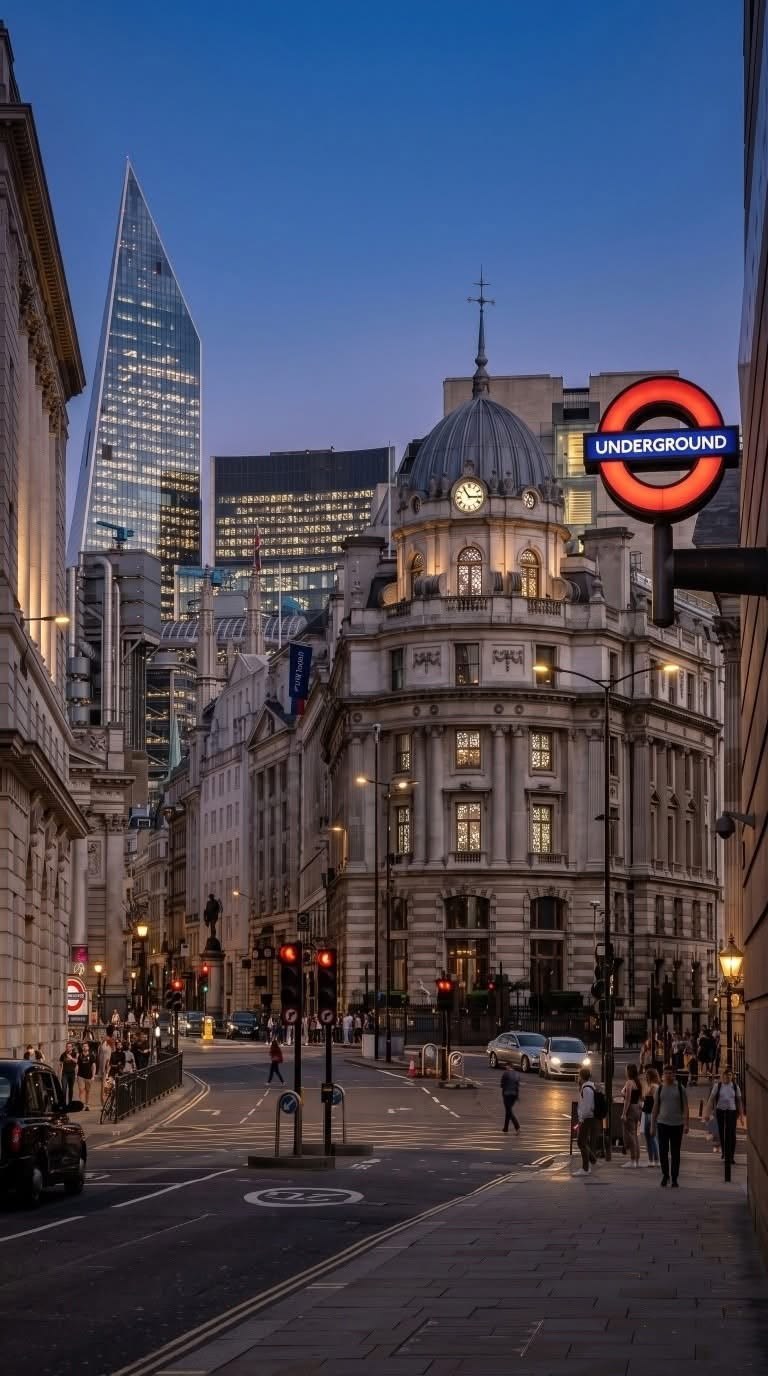
This is why the City has not disappeared. The image of the Underground sign beside historic stone and modern towers captures London's new office logic perfectly. The old financial district is not being replaced by a remote-work future. It is being filtered. Strong buildings survive. Weak buildings become stranded. The skyline grows, but tenants become more selective.
Savills has described Central London demand as polarised towards higher-quality office space, with Grade A rents continuing to rise. This is not just a rental statistic. It is a structural signal. In a world where work can happen elsewhere, the workplace must become more intentional. The future belongs to buildings that can offer what home cannot: proximity, identity, energy, collaboration and prestige.
The Majlis Newsletter
Continue reading with us. New essays on markets, pipelines and capital, delivered as they publish.
The residential city of prestige and pressure
London's residential market tells a different but related story. It is both highly desirable and deeply strained. Prime central London has gone through years of price adjustment since the post-2016 period, affected by tax changes, political uncertainty, higher borrowing costs and shifting global wealth patterns. Knight Frank's 2026 research described a market that was stabilising in activity but still shaped by political clouds, tax sensitivity and selective buyers.
At the same time, the wider city remains under severe housing pressure. The Greater London Authority's housing evidence continues to point to a persistent gap between supply, affordability and need. London's housing problem is not simply that homes are expensive. It is that the city has become economically dependent on workers, students, creatives, nurses, teachers, lawyers, financiers and service employees who cannot all be housed comfortably near the opportunities that pull them there.
This is one of London's deepest contradictions. The same scarcity that protects value at the top of the market can weaken the social and economic base beneath it. A city can attract global capital and still struggle to house the people who make it function.
The aesthetics of old money and new capital
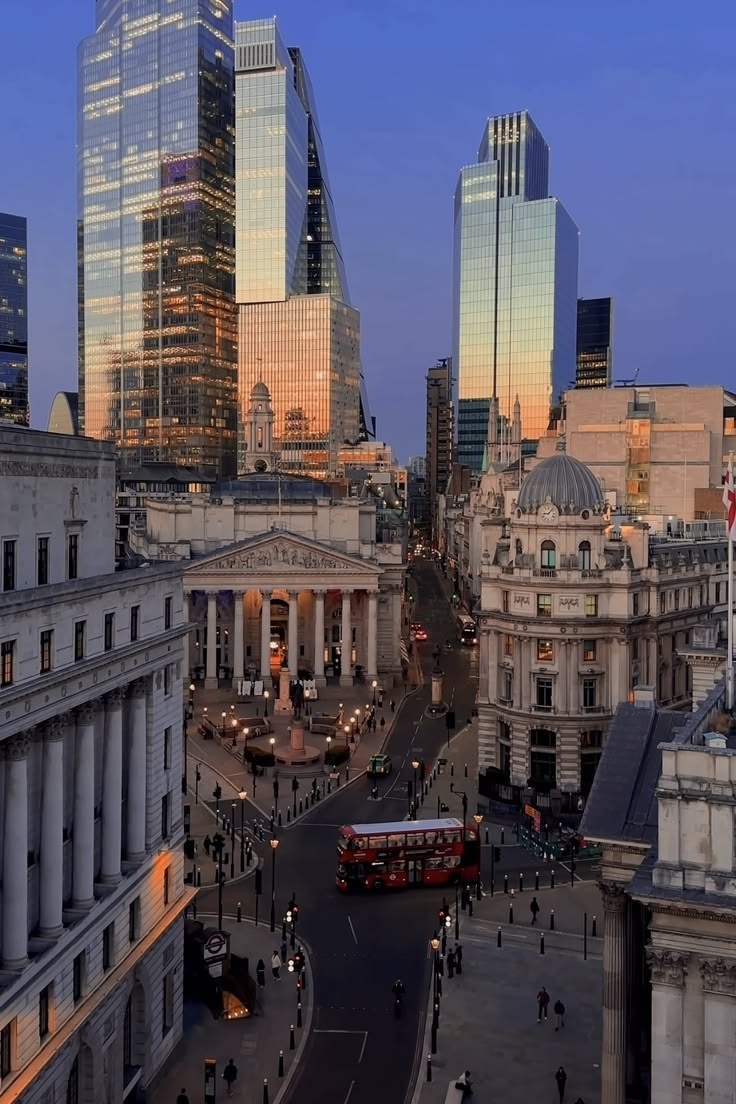
The photographs in this article show two Londons that do not cancel each other out. One is white, classical, quiet and residential: the world of terraces, gardens, railings, private streets and autumn trees. The other is vertical, reflective and corporate: the world of the City, towers, transport nodes and glass offices.
London's uniqueness lies in the way both images can belong to the same investment story. A townhouse in Kensington, a serviced apartment in Mayfair, an office floor near Liverpool Street, a hotel close to Green Park and a redeveloped building in the City all draw from the same underlying brand: London as a global address.
This is why the city's aesthetic matters. It is not merely decorative. The white stucco façade is part of the financial argument. The park view is part of the rental premium. The Underground sign is part of the liquidity story. The historic street beside a new tower is part of the reason occupiers and investors still accept London's cost. They are not buying efficiency alone. They are buying association.
Parks, estates and the geography of calm
London's parks are not a soft detail in the real-estate market. They are part of the city's value map. Hampstead Heath, Regent's Park, Hyde Park, Richmond Park and smaller garden squares all create micro-markets where light, air, greenery and prestige translate into pricing power.
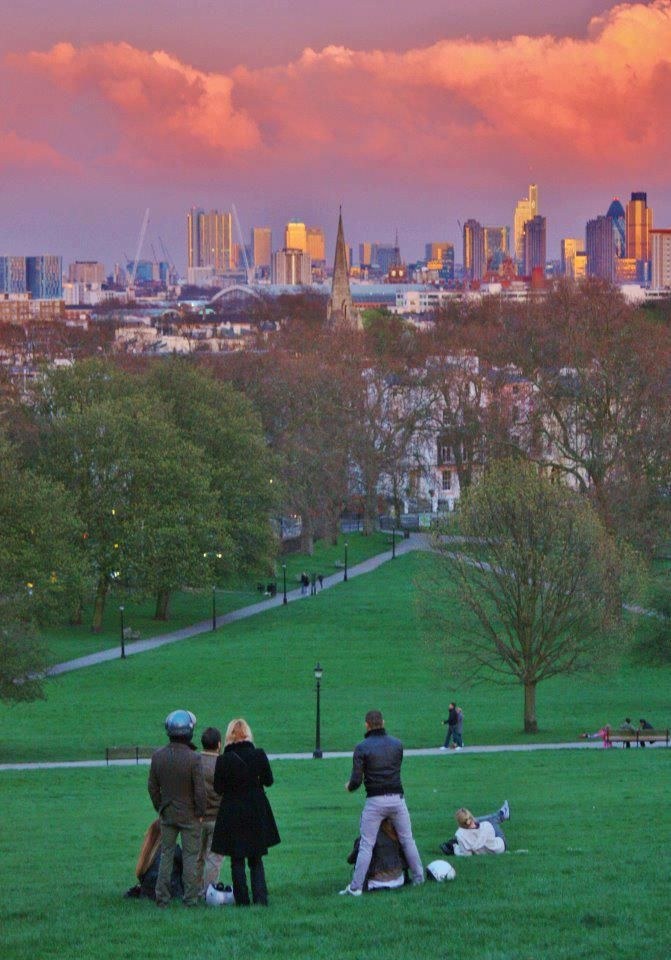
The image of a park at sunset, with a skyline beyond the grass, captures this relationship. London's financial districts are powerful because they are intense. Its residential enclaves are valuable because they offer retreat from that intensity. The ability to live near both is one of the reasons London remains difficult to replicate.
This is also why London can feel less planned than Singapore, less new than Dubai, less orderly than Tokyo and less monumental than Madrid, yet still more globally liquid than many of them. Its value is not in a single masterplan. It is in a geography of accumulated preference.

The risks are real
None of this makes London invincible. The city faces serious risks. High interest rates can reduce transaction volumes. Tax changes can discourage internationally mobile wealth. Planning constraints can limit new supply but also make development slower and more expensive. Ageing office stock requires major capital expenditure. Housing affordability can become a brake on labour-market competitiveness.
There is also a reputational risk. London cannot rely forever on being London. If infrastructure fails, if housing becomes impossible for workers, if political uncertainty continues, or if too much office stock becomes functionally obsolete, global capital will still arrive, but more selectively and more defensively.
That is why the current market is not a simple recovery story. It is a sorting process. The best assets are becoming stronger because they are scarce. The weakest assets are becoming weaker because they are no longer acceptable. In that sense, London is not one market. It is a test of quality.
Conclusion: the city remains, but the filter is harsher
London after Brexit and remote work is not the same city it was before. It is more expensive to finance, harder to develop, politically more sensitive and more selective in what occupiers and buyers will accept. But it has not disappeared from the global real-estate map. If anything, the last few years have revealed what kind of city London really is: not frictionless, not cheap, not easy, but extraordinarily durable.
The office market shows this most clearly. London is not experiencing the death of the office. It is experiencing the death of the mediocre office. Prime buildings with strong sustainability credentials, excellent locations and real occupier appeal continue to command rising rents. Weak buildings face a much harder future.
The same logic applies more broadly. Prime residential streets, historic estates, park-side homes, trophy offices and liquid central assets continue to attract capital because they combine scarcity, identity and institutional familiarity. But London's strengths also create pressure: housing affordability, social strain, planning complexity and the constant need to modernise old stock without losing the heritage that gives it value.
London refuses to disappear because it is not built on one cycle, one industry or one aesthetic. It is built on layers: finance, law, culture, history, education, transport, parks, housing and reputation. That layered value is why global capital keeps coming back. It is also why the next phase will not reward every building equally. In London, the future will belong to assets that are good enough to justify the city's cost.
References
- CBRE. (2026). European Investor Intentions Survey 2026. CBRE Research.
- CBRE UK. (2026). UK Real Estate Market Outlook 2026: Midyear Review - Office. CBRE Research.
- CBRE UK. (2026, August). UK real estate navigates uncertainty in the first half of 2026, says CBRE. CBRE Press Release.
- JLL. (2026). Central London Office Market Dynamics, Q2 2026. JLL Research.
- Savills. (2026). Central London Office Market Watch, Q2 2026. Savills Research.
- Savills. (2026). 2026 Global Occupier Outlook: Increased demand to drive higher rents. Savills Impacts.
- Knight Frank. (2026). Prime London market activity improves as backdrop stabilises. Knight Frank Research.
- Knight Frank. (2026). Prime London property market stabilises but political clouds gather. Knight Frank Research.
- Greater London Authority. (2026). Housing in London 2026: The evidence base for the London housing strategy. London Datastore.
- Greater London Authority. (2026). London Housing Market Report: Spring 2026. London Datastore.
- Centre for London. (2026). Delivering the homes London needs: What will it take? Centre for London.
- British Council for Offices. (2026). Central London office market shows resilience despite economic headwinds. BCO.
- House of Majlis All rights reserved. No part of this publication may be reproduced, distributed or transmitted without prior written permission from House of Majlis.
© 2026 House of Majlis. All rights reserved.
Back to the archive